The Ghost Bride
ARTIST STATEMENT
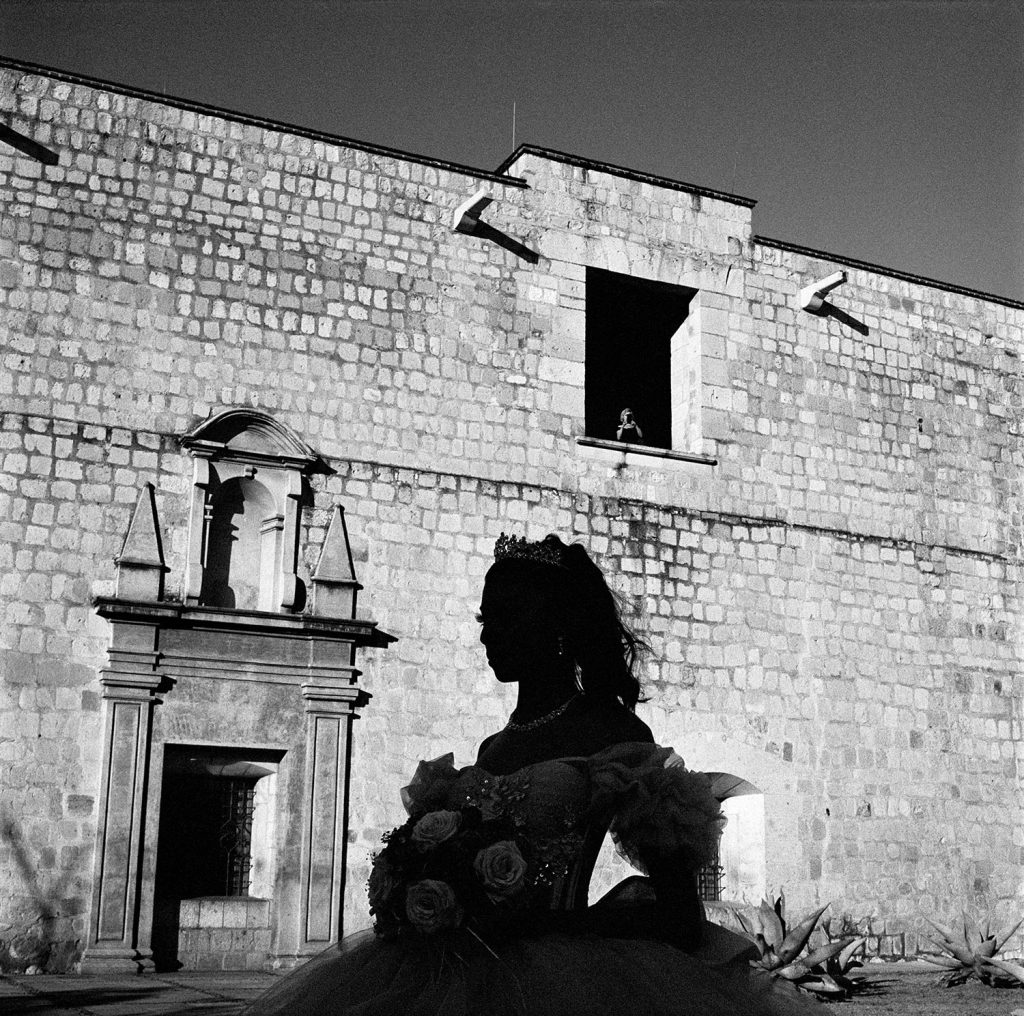
Documenting the daily rituals of village life in Oaxaca, Mexico has led me to photograph convivència, the dynamic tapestry of interconnected life through ever-evolving rituals of human interaction and communal gathering. I’ve been returning to Oaxaca for decades, where the people have become family and the villages my second home. I am godmother, family documentarian, and friend, bearing witness to the familial celebrations for nearly 40 years.
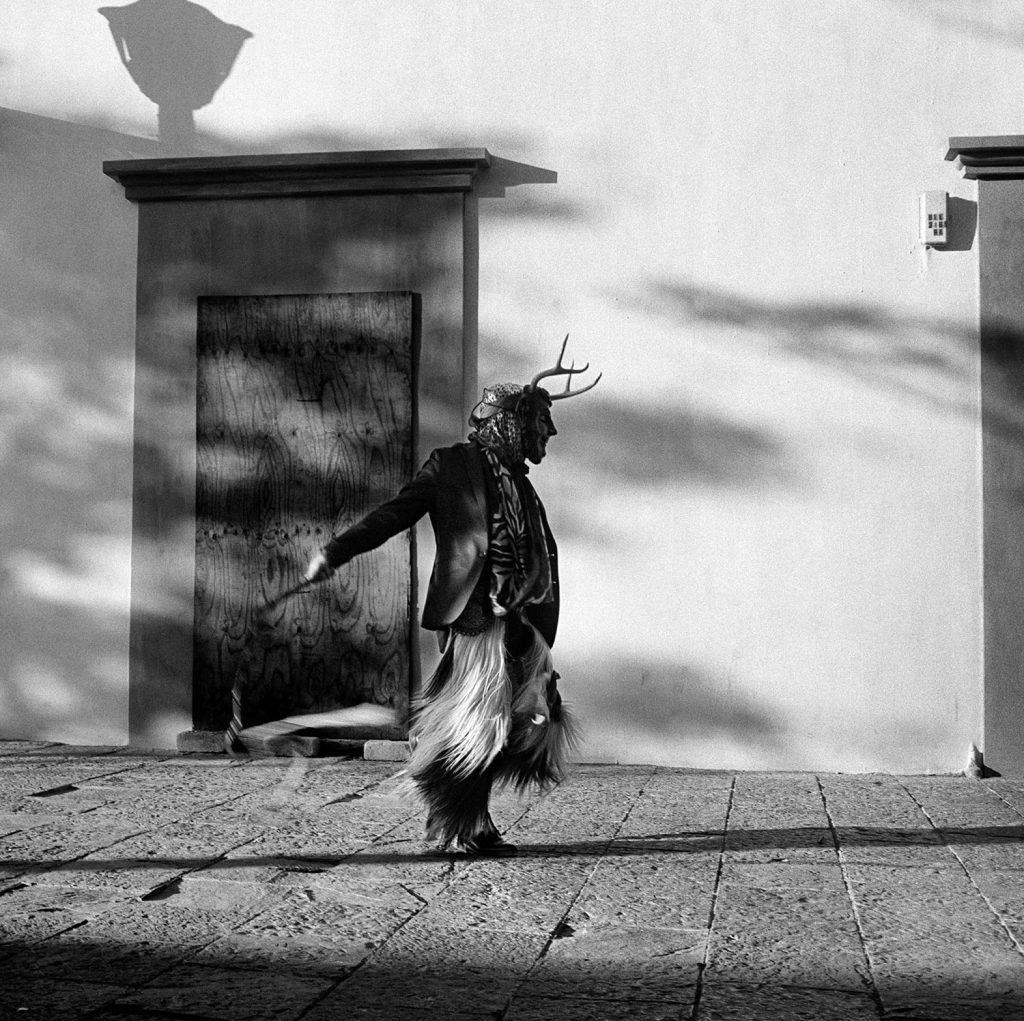
Processions with bandas, balloons, costumed figures, and giant papier-mâché puppets are asdaily an occurrence as people moving through the streets stopping to chat with neighbors andfriends. For these people, the experiences of convivència are as real in the corporeal world as in the spirit realm. Despite the power in these unique and ancient rituals, there are profound and accelerating threats to the fabric of convivència. Economic forces displace residents and stifle communal living. Demonstrations responding to gentrification, social dislocation, and environmental challenges passionately represent the desire for a collective spirit of togetherness.
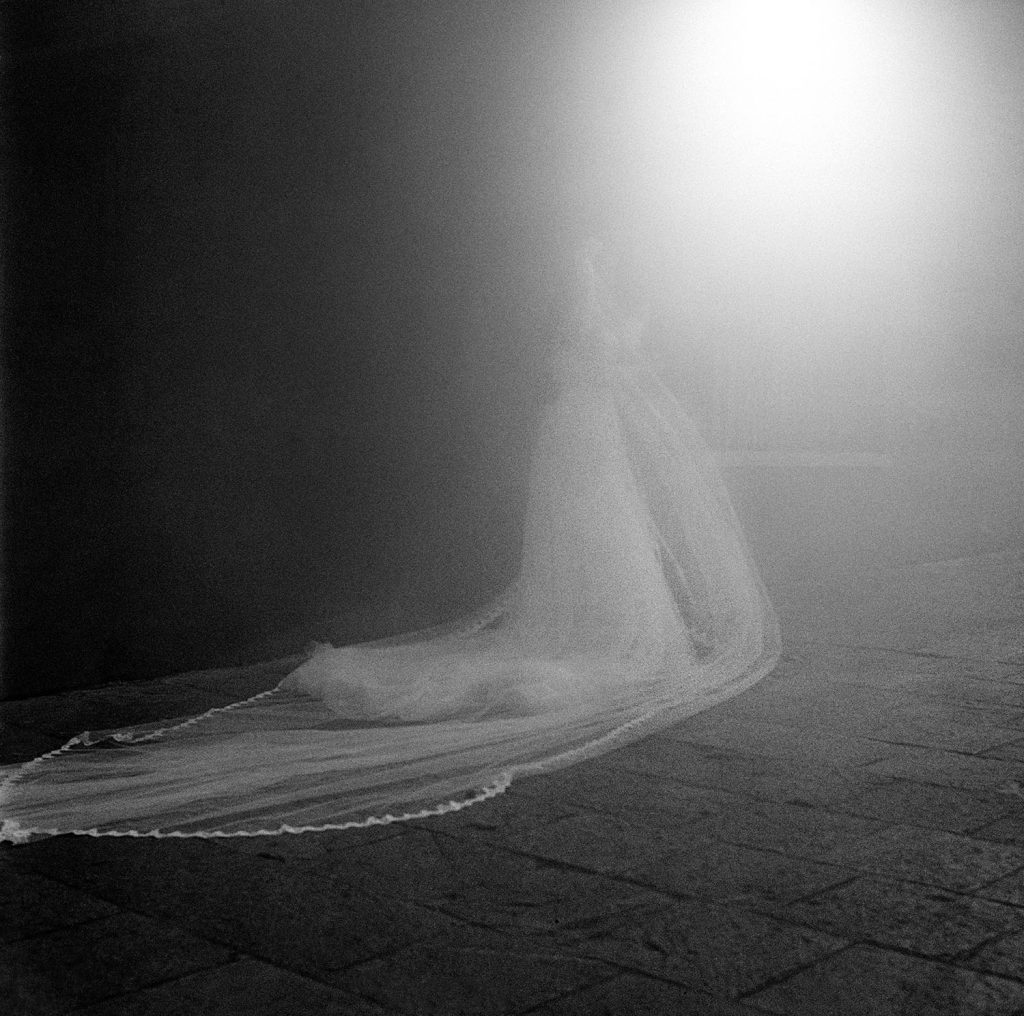
My project “The Ghost Bride” conveys what is lost in the erosion of cultural heritage unique to Oaxaca. It is a documentary investigation of the seen and the unseen. The knowledge and traditions inherited from previous generations and passed to descendants are rapidly vanishing. I realized this, poignantly, when I saw my image, “The Ghost Bride,” disappearing into a cloud of smoke– “¡Esfumate!”.
ARTIST BIO
Stella Johnson is a photographer and educator celebrated for her intimate, unflinching approach to documentary storytelling—work grounded in empathy, trust, and long-term human connection. For more than forty years, she has immersed herself in the rhythms of everyday life, photographing domestic scenes alongside religious and cultural rituals in Mexico. Rather than passing through as an observer, she returns to the same villages and families year after year, building relationships that evolve into lifelong friendships. This sustained, deeply relational practice extends to her work in Nicaragua, Cameroon, and Greece, where her images reflect not just moments, but enduring bonds and shared histories. During the COVID pandemic, Johnson discovered an unexpected parallel to village life at the Venice Beach Skate Park, CA. There, she encountered a vibrant, interdependent community of skateboarders—pushing one another creatively, celebrating victories, and absorbing losses together. The camaraderie she witnessed echoed the spirit she has long found in remote communities around the world, reinforcing her belief that connection and collaboration are among life’s most meaningful gifts.
More recently, Johnson has returned to using the same camera and film stock she worked with in her early years. Her ongoing project, The Ghost Bride, explores the erosion of cultural heritage in Oaxaca, Mexico—examining what is lost as traditions once passed through generations begin to disappear. The work is both a documentary inquiry and a meditation on the visible and the unseen.
Johnson received a Core Fulbright Scholar Grant to photograph in Mexico (2003–2004), followed by Fulbright Specialist grants to teach in Mexico (2006) and Colombia (2018). Her monograph Al Sol: Photographs from Mexico, Cameroon and Nicaragua (University of Maine Press, 2008) brings together decades of cross-cultural work, while ZOI (Wild Greek Press, 2018) continues her exploration of community, continuity, and the shared human experience